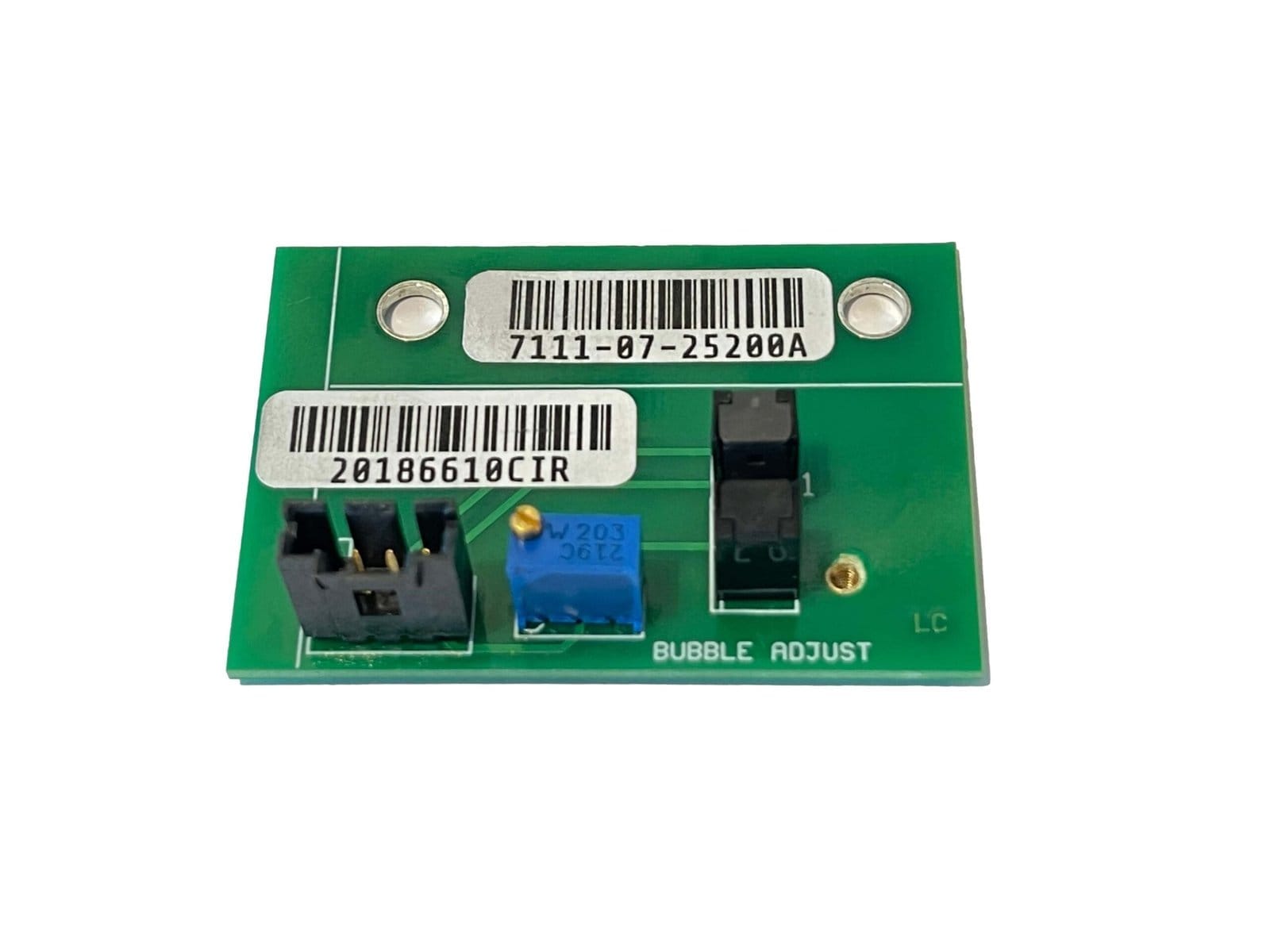
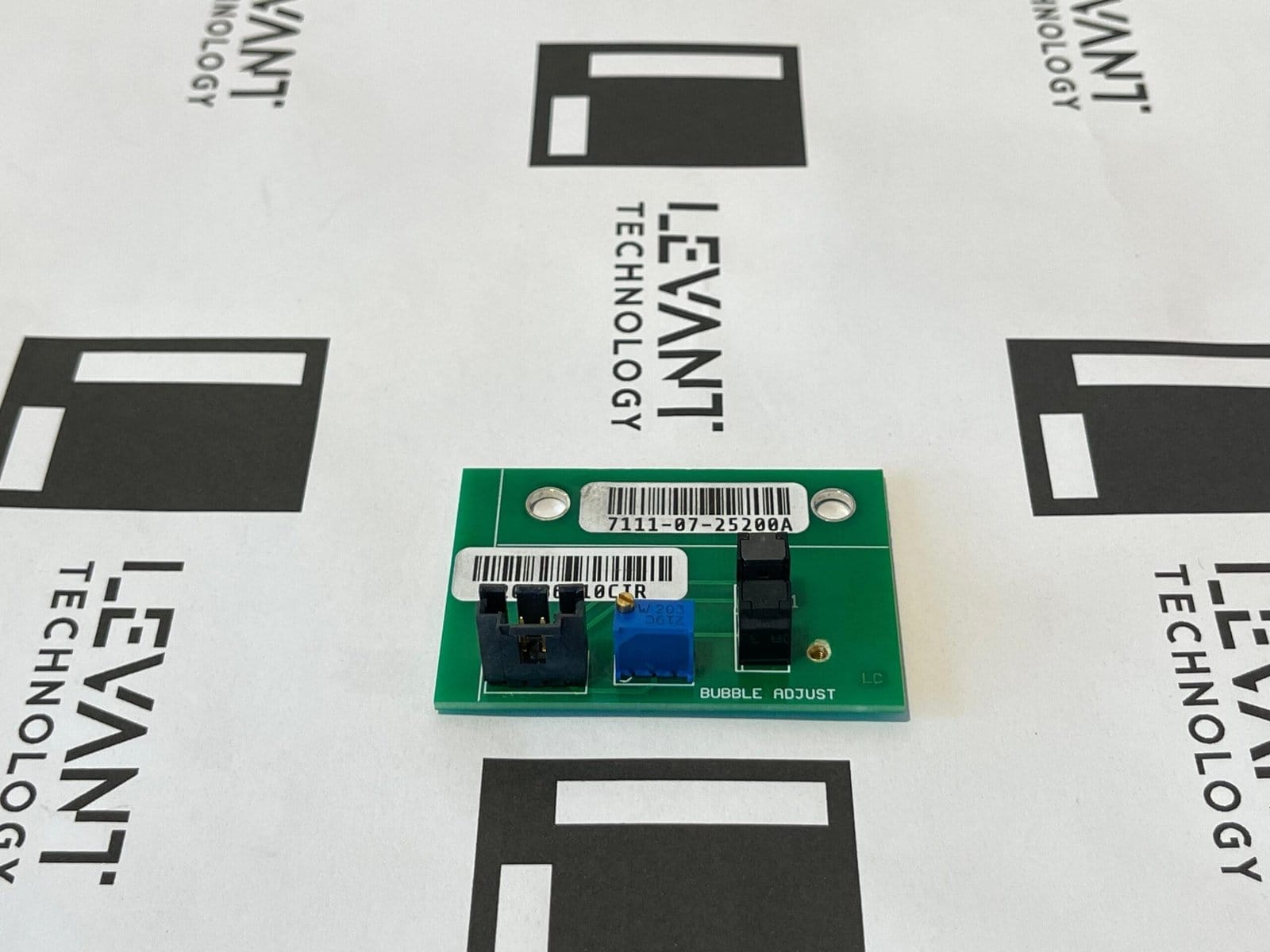
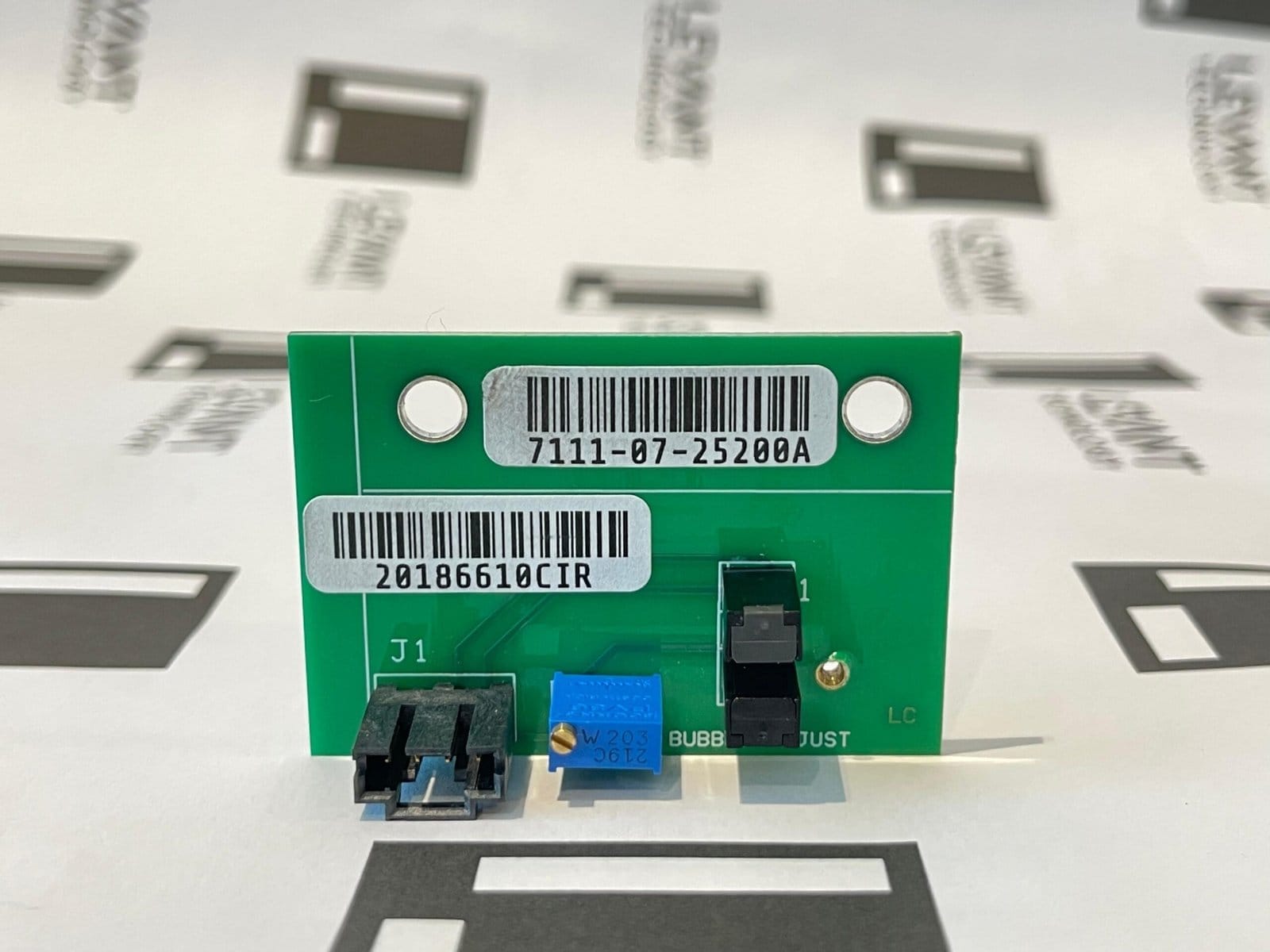
DCD Bubble Sensor PCB is a specialized electronic replacement board associated with bubble detection in compatible Candela Dynamic Cooling Device cryogen systems. Suitable for professional diagnosis and maintenance of DCD monitoring assemblies, subject to confirming the original PCB reference and whether the component belongs to the handpiece or canister bubble circuit. Available from Levant Technology UAE.
USD 175,00
DCD Bubble Sensor PCB is a specialized replacement electronic board associated with bubble detection in compatible Candela Dynamic Cooling Device (DCD) systems. The board belongs to the cryogen delivery monitoring arrangement used in selected professional aesthetic laser platforms, including compatible Candela GentleMax Pro equipment.
The Dynamic Cooling Device delivers a controlled cryogen spray to the treatment area as part of the laser’s epidermal cooling system. Bubble detection circuits provide information about the condition of the cryogen delivery pathway and support the equipment’s monitoring of DCD operation.
A DCD Bubble Sensor PCB may require replacement when qualified laser service technicians confirm a fault in the original sensor board or its associated electronic assembly. The appropriate replacement must match the intended sensor location, electrical connections, equipment generation, and original component reference.
Levant Technology supplies professional Candela laser spare parts, DCD sensor boards, cryogen delivery components, handpiece accessories, and electronic replacement parts in the UAE.
The DCD Bubble Sensor PCB is an electronic component associated with monitoring bubble-related conditions in the cryogen delivery system of compatible Candela laser equipment.
DCD stands for Dynamic Cooling Device, a technology used by Candela laser platforms to deliver cryogen spray to the skin in coordination with the laser treatment pulse.
The DCD system contains interconnected components, including a cryogen canister, delivery tubing, pressure-related components, electronic monitoring circuits, and the appropriate DCD handpiece.
In compatible Candela systems, bubble monitoring is performed through designated sensing circuits.
The equipment may use separate bubble detection locations associated with the canister and handpiece arrangements.
The corresponding sensor information is evaluated by the machine’s electronic control system.
The DCD Bubble Sensor PCB belongs to this monitoring architecture and is intended for the relevant compatible sensor assembly.
It is not a complete DCD cooling system, cryogen canister, handpiece, spray valve, or cooling water circulation sensor.
DCD Bubble Sensor PCB is a printed circuit board associated with the detection and monitoring of bubble conditions in a compatible Candela DCD cryogen delivery system.
A printed circuit board, or PCB, contains electrical connections and electronic components that support a designated circuit function.
Within DCD equipment, a bubble detection circuit provides information about the presence or absence of the expected sensing condition in the relevant cryogen pathway.
The exact sensing method depends on the original equipment design and installed component.
The equipment’s monitoring electronics evaluate the relevant signal as part of the DCD operational checks.
Different Candela machine generations may include separate bubble monitoring arrangements near the cryogen canister and within the handpiece delivery system.
This distinction is important when ordering a replacement.
A board associated with the canister bubble circuit should not automatically be substituted for a handpiece bubble sensor board.
The DCD Bubble Sensor PCB should therefore be matched using the original PCB markings, physical layout, electrical connectors, and intended installation position.
Specialized Candela DCD Component
The board is associated with the cryogen bubble monitoring architecture of compatible Candela laser equipment.
Supports DCD Monitoring Functions
A correctly matched sensor board provides the intended electrical sensing function within the relevant DCD circuit.
Relevant to Professional Fault Diagnosis
Bubble-related fault messages may require inspection of the corresponding sensor, cryogen delivery components, and electronic connections.
Targeted Replacement Option
Replacing an individual PCB may be appropriate when the fault has been isolated to that component.
Professional Laser Spare-Part Supply
Levant Technology supplies DCD electronics and related spare parts for clinics, biomedical engineers, and professional laser service specialists in the UAE.
The Candela Dynamic Cooling Device is an epidermal cooling technology used in compatible professional laser systems.
DCD delivers a controlled cryogen spray to the treatment area around the time of laser energy delivery, according to the selected equipment settings.
The purpose of this arrangement is to provide epidermal cooling during appropriate laser treatments.
The DCD system uses specialized components rather than the laser head’s internal water cooling circuit.
Its relevant assemblies may include:
The DCD Bubble Sensor PCB is associated with the bubble detection portion of this arrangement.
It does not independently produce cryogen, generate a laser pulse, or regulate the machine’s internal water cooling temperature.
A bubble detection system monitors a designated condition in the DCD cryogen delivery pathway.
The sensor arrangement provides an electrical signal to the relevant laser electronics.
The machine evaluates the signal according to its programmed DCD diagnostic and operating procedures.
The exact physical detection mechanism may depend on the sensor’s design.
In suitable equipment configurations, bubble monitoring is used to identify conditions that may affect the expected cryogen delivery process.
However, a bubble sensor PCB should not automatically be described as a continuous flow meter.
Its function may involve detecting a specific bubble-related signal rather than measuring the volume or mass of cryogen delivered during each spray event.
Similarly, the sensor board does not independently determine cryogen spray duration or laser pulse timing.
These operations involve the complete DCD control and delivery system.
The DCD Bubble Sensor PCB must operate according to its intended circuit configuration.
Certain Candela laser systems distinguish between two bubble detection circuits.
1. Handpiece Bubble Circuit
Associated with bubble-related sensing at the DCD handpiece or corresponding delivery system location.
2. Canister Bubble Circuit
Associated with bubble-related sensing at the cryogen canister or the corresponding internal DCD delivery assembly.
The Candela GentleMax Pro operator’s manual identifies these two monitoring functions through separate fault codes:
These fault codes indicate different areas of the bubble monitoring system.
The two circuits may use different components, electrical connections, or installation arrangements.
The product name DCD Bubble Sensor PCB does not by itself establish which circuit the supplied board belongs to.
Before ordering, customers should confirm whether the original component is installed in the canister-side sensing arrangement or within the handpiece assembly.
The phrases DCD Bubble Sensor PCB and Handpiece Bubble Sensor Board can refer to related but different components.
DCD Bubble Sensor PCB
A general product designation for a PCB associated with the DCD cryogen bubble monitoring system.
Handpiece Bubble Sensor Board
A more specific name generally used for a sensor PCB associated with the handpiece-side DCD bubble monitoring assembly.
Canister Bubble Sensor Board
A designation associated with the cryogen canister-side bubble detection arrangement.
These components must not automatically be treated as interchangeable.
A PCB intended for the handpiece may have different mounting, connector, or signal requirements from a canister-side sensor assembly.
Levant Technology can assist with component identification using photographs and the original PCB reference.
A common maintenance error is confusing the DCD cryogen system with the machine’s internal cooling water circuit.
DCD Bubble Sensor PCB
Associated with bubble detection in the cryogen delivery arrangement used for epidermal cooling.
Cooling Water Flow Sensor
Associated with monitoring the circulation of water within the laser’s internal cooling system.
Water Pressure Switch
Associated with a specified pressure condition in the cooling water circuit.
Water Temperature Sensor
Associated with measuring or monitoring cooling water temperature.
The DCD cryogen system and the internal water cooling circuit perform different functions.
A DCD bubble circuit warning should therefore not automatically be diagnosed as a water pump or DI water filter problem.
Similarly, a water circulation fault does not independently establish a problem with the DCD Bubble Sensor PCB.
The DCD cryogen valve and bubble sensor board are different components.
DCD Bubble Sensor PCB
Associated with electrical detection of the relevant bubble sensing condition.
DCD Cryogen Valve
Associated with controlling cryogen passage through the appropriate delivery arrangement.
DCD Spray Nozzle
Directs the designated cryogen spray toward the treatment area.
DCD Canister
Contains the cryogen supply used by the system.
A defective cryogen valve may affect spray delivery even when the bubble monitoring electronics are functioning correctly.
Likewise, a bubble detection circuit problem can occur without proving that the spray valve itself is defective.
The appropriate replacement depends on the actual diagnosed fault.
Bubble detection and pressure monitoring are different DCD functions.
Bubble Sensor PCB
Associated with detecting the designated bubble-related condition.
DCD Pressure Sensor
Associated with monitoring the pressure condition of the corresponding cryogen system.
DCD Temperature Sensor
Associated with measuring selected temperature conditions relevant to the DCD assembly.
DCD Canister Heater
Associated with the relevant canister temperature or pressure management arrangement, depending on the machine design.
These components provide different information to the equipment’s monitoring electronics.
A canister pressure warning should not automatically be interpreted as a bubble sensor board fault.
Likewise, a bubble circuit warning does not establish a defective pressure sensor.
The specific error message and affected DCD subsystem should be evaluated by qualified service personnel.
Compatible Candela DCD handpieces may contain an internal cooling fan.
Handpiece Cooling Fan
Moves air through the designated ventilation pathway to help cool the handpiece.
Handpiece Fan Filter
Captures dust entering the corresponding local ventilation arrangement.
DCD Bubble Sensor PCB
Associated with the electrical bubble detection function of the relevant cryogen delivery circuit.
The GentleMax Pro operator’s manual notes that the handpiece fan helps cool the handpiece and reduce bubble-related faults.
However, the fan does not perform the same sensing function as the bubble detection PCB.
A bubble warning may require technicians to evaluate both the electrical monitoring system and the general handpiece condition.
Replacing the fan does not automatically repair a defective sensor board.
Replacing the sensor board does not independently repair a failed ventilation fan.
Candela DCD handpieces may incorporate additional electronic sensors associated with handpiece operation.
DCD Bubble Sensor PCB
Associated with the cryogen bubble monitoring system.
Handpiece Slider Sensor PCB
Associated with detecting the relevant treatment slider position or configuration, depending on the handpiece design.
Handpiece Control Electronics
Associated with the designated electrical connections, switches, and control-related functions.
The bubble sensor and slider sensor serve different purposes.
A slider-related error should not automatically lead to replacement of the DCD Bubble Sensor PCB.
The correct electronic part should be identified using the original PCB reference and the actual fault.
Candela GentleMax Pro equipment supports different epidermal cooling configurations.
DCD – Dynamic Cooling Device
Uses controlled cryogen spray for epidermal cooling.
ACC – Air Cooling Compatible
Supports the use of a compatible external refrigerated air cooling system through the appropriate delivery accessory.
The DCD Bubble Sensor PCB is associated with the cryogen delivery arrangement rather than a separate external refrigerated air cooling unit.
A component intended for DCD bubble sensing should not automatically be considered compatible with an ACC-only handpiece configuration.
Customers should confirm their machine’s delivery system before ordering.
The Candela GentleMax Pro combines two laser technologies:
The machine supports compatible DCD delivery arrangements used for epidermal cooling.
The laser generation system and the cryogen cooling system perform different functions.
The Alexandrite and Nd laser heads produce the corresponding treatment wavelengths.
The DCD system supplies the designated cryogen spray.
The DCD Bubble Sensor PCB belongs to the cooling delivery monitoring arrangement, not the optical laser generation system.
The PCB itself does not have a 755nm or 1064nm operating wavelength.
These wavelength values describe the host laser equipment.
The DCD Bubble Sensor PCB is listed by Levant Technology for DCD-equipped laser platforms, including Candela GentleMax Pro.
Related bubble sensor board configurations are available for selected Candela equipment families, including:
However, this is a list of equipment families using related DCD technology, not a confirmed universal compatibility list for the supplied PCB.
Different machines may use different canister-side and handpiece-side sensor boards.
Compatibility with Candela GentleMax Pro Plus must also be verified separately.
The replacement PCB should match the original board part number, electrical connector arrangement, mounting configuration, and equipment revision.
The F1.1 – Handpiece Bubble Circuit fault is associated with the handpiece-side bubble monitoring arrangement.
In the GentleMax Pro operator’s manual, this fault indicates that the handpiece bubble circuit test did not detect the expected change in its signal.
Possible areas requiring evaluation include:
The presence of F1.1 does not prove that a particular sensor PCB has failed.
The problem may involve the handpiece, tubing, cryogen supply, or other related components.
A replacement PCB should be selected only after the actual defective component has been identified.
The F1.2 – Canister Bubble Circuit fault is associated with the canister-side DCD bubble detection arrangement.
The GentleMax Pro operator’s manual describes this condition as a bubble circuit test that did not detect the expected signal change.
The corresponding diagnosis may involve the canister-side sensing arrangement, related electrical connections, cryogen supply, or other DCD components.
F1.2 is different from F1.1 because it relates to a different monitored circuit.
A handpiece bubble sensor PCB should not automatically be ordered to address a canister bubble circuit fault.
The correct component depends on the installed machine and diagnosed failure.
The DCD cryogen canister supplies the cooling medium used by the corresponding treatment delivery system.
The canister’s condition and connection to the equipment are relevant to the operation of the broader DCD arrangement.
A bubble-related fault may occur alongside a cryogen delivery problem.
However, a fault indication alone does not establish whether the cause is a sensor board, canister, tubing, connection, or another component.
The correct maintenance approach follows the operator’s manual and applicable service documentation.
The DCD Bubble Sensor PCB is an electronic monitoring component rather than a replacement for the cryogen canister itself.
A DCD sensor board may require inspection or replacement when qualified technicians identify a defect in the corresponding electronic assembly.
Possible reasons for investigation include:
These conditions do not automatically establish that the board is defective.
Similar symptoms may result from a depleted or incorrectly connected cryogen supply, damaged tubing, handpiece problems, wiring issues, or other DCD components.
A correctly matched replacement may be used after the fault has been isolated to the PCB.
1. Confirm the Sensor Location
Determine whether the required replacement belongs to the handpiece bubble circuit or the canister bubble circuit.
The installation location matters because the electrical and mechanical components may differ.
2. Confirm the Original Board Reference
Compare the original PCB part number, connector design, physical layout, and equipment generation with the proposed replacement.
Two sensor boards may appear similar without being electrically interchangeable.
These checks help establish the correct product for professional maintenance.
The DCD system forms part of the epidermal cooling arrangement used during appropriate treatments.
Its operation depends on the interaction between the cryogen supply, handpiece, delivery components, monitoring electronics, and machine controls.
A bubble detection circuit provides information to the relevant equipment monitoring system.
However, the DCD Bubble Sensor PCB should not be described as independently guaranteeing treatment safety, preventing all cooling faults, or ensuring a particular clinical result.
The complete machine and DCD delivery system must operate according to the manufacturer’s requirements.
The laser must not be used for treatment when a relevant cooling safety concern remains unresolved.
Sensor circuits and protective functions must never be bypassed as a substitute for correct maintenance.
Professional Candela laser equipment requires appropriate periodic inspection and maintenance.
The DCD system may be inspected when abnormal spray performance, cryogen delivery problems, or relevant fault indications occur.
Technicians may assess the canister, handpiece, electrical connections, delivery components, and relevant sensing circuits.
A PCB should not automatically be replaced during every routine service.
Unlike certain filters or consumables, an electronic sensor board is generally replaced according to its condition or a confirmed fault.
The DCD Bubble Sensor PCB is a targeted electronic replacement component rather than a routine disposable consumable.
DCD sensor boards may have similar appearances while using different circuits, connectors, and mounting arrangements.
For accurate replacement identification, provide:
Levant Technology can assist customers with available component information and replacement-part identification.
The correct PCB should be selected using the original part reference rather than the product category alone.
DCD Bubble Sensor PCB installation should be performed by qualified laser service technicians familiar with the appropriate Candela DCD system.
Professional aesthetic laser equipment includes high-voltage electrical components, sensitive electronics, optical assemblies, and pressurized cryogen delivery equipment.
Internal servicing requires the manufacturer’s applicable electrical, mechanical, and cryogen handling procedures.
The replacement board must match the intended sensor circuit and original electrical configuration.
Qualified personnel should inspect the associated connectors, wiring, sensor arrangement, and DCD delivery components as appropriate.
After replacement, technicians should verify the relevant bubble detection and DCD functions according to the manufacturer’s requirements.
The machine should undergo the necessary operational and safety checks before returning to clinical use.
Levant Technology supplies professional aesthetic laser spare parts and electronic components for clinics, dermatology centers, biomedical engineers, and laser service specialists throughout the UAE.
Our product range includes DCD bubble sensor PCBs, handpiece sensor boards, cooling fans, cryogen delivery accessories, electronic control boards, laser head components, and professional equipment replacement parts.
For customers maintaining Candela DCD-equipped systems, our team can assist with board identification, compatibility enquiries, available specifications, pricing, and orders.
What is DCD Bubble Sensor PCB?
It is an electronic board associated with bubble detection within compatible Candela Dynamic Cooling Device cryogen delivery systems.
What does DCD mean?
DCD stands for Dynamic Cooling Device, a Candela cooling technology using controlled cryogen spray.
What does the DCD Bubble Sensor PCB detect?
It is associated with detecting the relevant bubble sensing condition within the designated DCD cryogen delivery pathway.
Is the sensor used in the internal water cooling circuit?
No. The DCD bubble monitoring system is separate from the laser’s internal cooling water circulation circuit.
Does the board measure water flow?
The board is associated with DCD bubble detection, not the machine’s water flow measurement system.
Is this a cryogen flow meter?
Not necessarily. The exact sensing and electrical signal functions depend on the supplied PCB configuration.
Does the board control the DCD spray valve?
The bubble sensor is associated with monitoring. Spray valve operation involves separate DCD control and delivery components.
Does this PCB produce cryogen spray?
No. Cryogen is supplied through the corresponding canister and delivery arrangement.
Is this the same as a handpiece bubble sensor board?
Not necessarily. The product must be identified as a handpiece-side or canister-side component.
What is the difference between handpiece and canister bubble circuits?
They are separate monitoring circuits associated with different locations in the DCD delivery system.
What is Candela fault F1.1?
F1.1 is the Handpiece Bubble Circuit fault identified in the GentleMax Pro operator’s manual.
What is Candela fault F1.2?
F1.2 is the Canister Bubble Circuit fault identified in the GentleMax Pro operator’s manual.
Does F1.1 always mean the sensor PCB is faulty?
No. The fault may involve the handpiece, cryogen delivery arrangement, electronics, or related components.
Does F1.2 always require a canister bubble sensor replacement?
No. The fault requires diagnosis before the correct replacement component can be identified.
Can a faulty bubble sensor PCB interrupt equipment operation?
A defect in the DCD monitoring circuit may contribute to a fault indication or operational interruption, depending on the machine’s control logic.
Does replacing the PCB eliminate all DCD errors?
No. DCD errors can involve cryogen supply, pressure, temperature, tubing, valves, handpieces, and electronic components.
Is the PCB the same as a DCD pressure sensor?
No. Bubble sensing and pressure monitoring are different functions.
Is the board the same as a DCD handpiece cooling fan?
No. The cooling fan moves air within the handpiece, while the bubble sensor board belongs to the electronic sensing arrangement.
Does this fit Candela GentleMax Pro?
The product is listed for compatible GentleMax Pro DCD systems. Exact PCB compatibility must be verified.
Can it be used with GentleLase Pro?
Related DCD bubble sensor boards are available for GentleLase Pro equipment, but the supplied board must match the original reference.
Can it be used with GentleYAG Pro?
Compatibility depends on the specific sensor board and DCD configuration.
Can it be used with Mini GentleLase?
Related components exist for Mini GentleLase equipment, but the exact replacement must be confirmed.
Does it fit every Candela machine?
No. Sensor location, electronic design, connectors, and equipment generation determine compatibility.
Is it compatible with GentleMax Pro Plus?
Compatibility with GentleMax Pro Plus must be verified separately.
Does this board include a sensor or wiring harness?
The supplied components, sensor elements, connectors, and wiring should be confirmed before ordering.
What is the PCB part number?
Levant Technology can provide available identification details for the supplied board.
What electrical specifications are required?
The applicable voltage, connector arrangement, and signal configuration must match the original component.
Is the board a genuine Candela OEM part?
OEM status and manufacturer information should be confirmed with Levant Technology.
Is the board supplied new or used?
Contact Levant Technology for the current component condition and availability.
Does it require periodic replacement?
No universal fixed replacement interval should be assumed. Replacement depends on the component condition and applicable service requirements.
Who should install the replacement PCB?
Installation and DCD verification should be performed by qualified professional laser service technicians.
Can I buy DCD Bubble Sensor PCB in Dubai or the UAE?
Levant Technology handles enquiries for Candela DCD bubble sensor boards and professional aesthetic laser spare parts in the UAE.
Looking for a DCD Bubble Sensor PCB for a compatible Candela Dynamic Cooling Device system?
Levant Technology supplies DCD sensor boards, handpiece electronics, cryogen delivery accessories, cooling system parts, electronic PCBs, and professional aesthetic laser spare parts for clinics and qualified service specialists throughout the UAE.
For accurate matching, contact our team with the original PCB reference and confirm whether the required board is for the handpiece or canister bubble circuit.
Explore our laser spare parts collection for more Candela DCD components, sensor boards, and professional laser equipment replacement parts.
Interested in DCD Bubble Sensor PCB? Contact Levant Technology on WhatsApp for pricing, availability, and orders.
USD 4.100,00
USD 4.100,00
USD 135,00 Original price was: USD 135,00.USD 95,00Current price is: USD 95,00.
USD 410,00
USD 175,00
USD 55,00
USD 28,00
USD 250,00
USD 310,00
USD 1.100,00

Write a Review